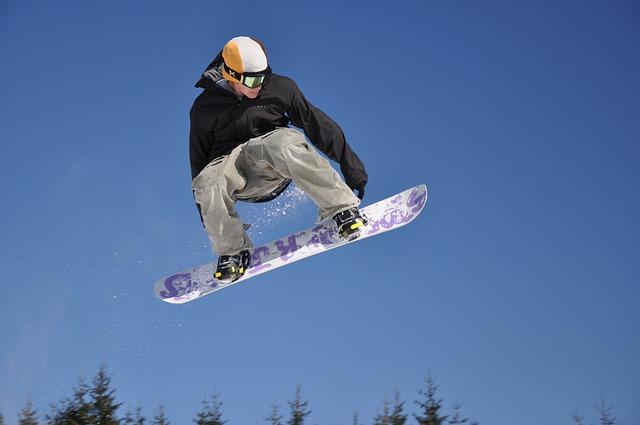
In recent years, the vibrant world of freestyle snowboarding has captivated audiences with its blend of athletic prowess and creative expression. However, as the sport continues to evolve within the competitive arena, a growing discourse has emerged questioning whether freestyle snowboarding competitions are becoming too formulaic. This analysis seeks to explore the intricate dynamics that may be constraining the sport’s inherent creativity, examining the role of judging criteria, the influence of standardized trick repertoires, and the impact of commercial interests. By delving into these aspects, we aim to uncover whether the essence of freestyle snowboarding is at risk of being overshadowed by a rigid competitive framework, and what this means for the future of the sport.
Evolution of Freestyle Snowboarding Competitions: A Historical Perspective
Freestyle snowboarding competitions have undergone a fascinating transformation since their inception in the late 20th century. Initially, these events were a vibrant celebration of creativity and individuality, where riders were encouraged to push boundaries and express their unique styles. The spirit of improvisation and innovation reigned supreme, as snowboarders performed daring tricks and maneuvers that defied conventional norms. As the sport gained popularity, however, a more structured approach began to take shape, influenced by the need for standardized judging criteria and fair competition. This evolution led to the development of specific formats and scoring systems that aimed to balance creativity with measurable performance metrics.
Today, some critics argue that this shift towards standardization has made freestyle snowboarding competitions increasingly formulaic. Riders often feel compelled to conform to a specific set of tricks and sequences that are known to score well, potentially stifling creativity. Key factors contributing to this perception include:
- Judging Criteria: Emphasis on technical difficulty and execution over originality.
- Trick Repetition: Frequent repetition of high-scoring tricks across competitions.
- Course Design: Standardized features that limit innovative approaches.
While these changes have undeniably enhanced the professionalism and accessibility of the sport, they also raise questions about the balance between maintaining competitive integrity and preserving the core essence of freestyle snowboarding. As the sport continues to evolve, finding a harmonious blend of creativity and competition remains a key challenge for organizers and participants alike.

Assessing the Impact of Judging Criteria on Creativity and Innovation
The structure of judging criteria in freestyle snowboarding competitions plays a pivotal role in shaping the landscape of the sport. Creativity and innovation, once the heart of these competitions, now face the challenge of being quantified and measured against predefined benchmarks. Judges often prioritize technical precision and the execution of complex tricks, which inadvertently encourages athletes to conform to a particular style that guarantees higher scores. This emphasis on a formulaic approach can stifle the creative freedom that athletes once enjoyed, as they might opt for routines that align closely with scoring rubrics rather than pushing the boundaries of the sport.
As a result, the evolution of freestyle snowboarding into a more standardized competitive format has sparked debates among enthusiasts and professionals alike. There are several potential impacts to consider:
- Reduced Risk-taking: Athletes may avoid innovative moves that could be deemed too risky under current judging standards.
- Homogenization of Style: A tendency towards uniformity in performances as riders replicate high-scoring tricks.
- Impact on Viewer Engagement: Spectators may find the sport less captivating if originality is overshadowed by predictability.
Addressing these issues involves re-evaluating the balance between technicality and creativity in judging criteria, ensuring that the spirit of innovation continues to thrive in freestyle snowboarding.

Balancing Tradition and Progress: Striving for a Dynamic Competition Format
In recent years, the world of freestyle snowboarding has witnessed a compelling debate: how to honor the rich history of the sport while also fostering innovation and excitement. Balancing tradition with progress requires a nuanced approach to competition formats that both respects the foundational elements of snowboarding and embraces the creativity and unpredictability that have always been its hallmark.
To achieve this balance, competition organizers might consider several strategies:
- Incorporating diverse judging criteria: Moving beyond the standard metrics to include points for originality and style can encourage riders to push boundaries.
- Rotating event structures: Experimenting with different formats, such as head-to-head matchups or team events, can inject new energy into competitions.
- Integrating rider feedback: Actively seeking input from competitors can lead to formats that better reflect the evolving nature of the sport.
By thoughtfully combining these elements, the sport can maintain its core identity while continuously evolving, ensuring that competitions remain dynamic and engaging for both athletes and spectators.
Recommendations for Enhancing Unpredictability and Excitement in Events
To inject a dose of unpredictability and invigorate the excitement in freestyle snowboarding competitions, it is crucial to rethink the conventional formats that have dominated the scene. Incorporating spontaneous elements can shake up the routine and captivate audiences. One approach is to introduce dynamic scoring systems that reward creativity and innovation, not just technical perfection. By prioritizing unexpected moves and unique combinations, judges can motivate athletes to push their boundaries.
Diversifying event formats can also play a pivotal role in enhancing the thrill factor. Consider these strategies:
- Surprise Challenges: Integrate unexpected obstacles or course changes that require on-the-spot adaptability from competitors.
- Interactive Audience Involvement: Allow audiences to influence certain aspects of the competition, such as selecting music tracks or suggesting trick combinations.
- Themed Competitions: Introduce events with specific themes that encourage riders to incorporate stylistic elements or historical influences into their performances.
Such initiatives can not only rejuvenate the sport but also ensure that each competition offers a fresh, exhilarating experience for both participants and spectators alike.